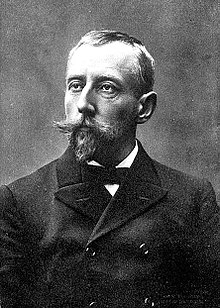
As most of you know, yesterday marked the 100th anniversary of Norwegian explorer Roald Amundsen becoming the first person to reach the South Pole. A century ago, that was almost as big of an accomplishment as man walking on the moon. Back then, exploration was quite the source for national pride, and at the time, there were a number of explorers that were vying for the chance to be the first to plant their flag at 90ºS.
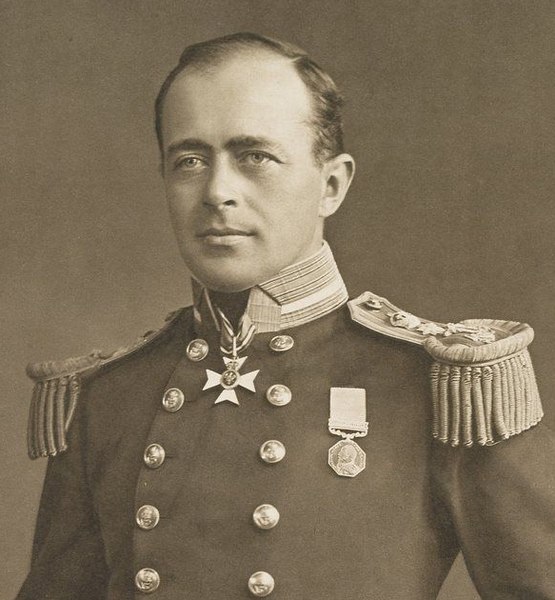
Amundsen's triumph followed a number of failed attempts by several pioneers of arctic exploration, including Ernest Shackleton and the Norwegian's chief rival, Robert Falcon Scott. But was was diffeent on this expedition from all the others, and how did Amundsen reach the finish line more than a month ahead of Scott? That is the subject of an excellent article on the National Geographic Adventure blog, which goes into detail on the advantages that Amundsen had over Scott, thanks to the time he spent in the Arctic, where he learned polar survival skills from the Inuit.
Throughout his lifetime, Amundsen was drawn to the cold, polar regions of the planet. Not only did he visit the South Pole, but he also became the first person to visit both Poles by going to 90º North as well. The explorer also pioneered routes through the Northwest and Northeast passages too. On many of his adventures, he displayed a keen ability to adapt to situations and learn from his challenges. So when Amundsen had a chance to learn from the Inuit tribes while making the first traverse of the Northwest Passage, he became a keen student of the skills that allowed them to thrive above the Arctic Circle.
When he returned to the Antarctic, Amundsen knew that sled dogs and warm furs were going to help him win the day, and in the end, those choices proved to be very wise. Not only was he able to move much faster than Scott, but his approach was much more efficient for the men too.
The rest is, as they say, history.
Showing posts with label History. Show all posts
Thursday, December 15, 2011
Wednesday, December 14, 2011
Antarctica 2011: Celebration At The Pole!
Today marks the 100th anniversary of the arrival of Roald Amundsen, and his team, at the South Pole. To commemorate the event, I have posted a lengthy article about the race between Amundsen and his chief rival, Robert Falcon Scott, on Gadling this morning. You can read it here. Most of you already know the story of course. Amundsen, who employed techniques and skills that he learned from the Inuit tribes in the Arctic, was able to use sled dogs and a shorter approach to beat Scott to the Pole. The tragic story of Scott and his men will unfold in future posts, but today we celebrate the Norwegian explorer, who became the first to reach the bottom of the world, 90ºS.
To mark this auspicious occasion, Norway's Prime Minister, Jens Stoltenberg, skied the last few kilometers to the Pole along the very same route that Amundsen and his team took on their historic expedition. When he arrived at the Pole, Stoltenberg was joined by research scientists, explorers, adventure travelers, and other dignitaries in a ceremony that paid homage to the spirit of Amundsen, who would later become the first person to visit both the North and South Pole, while also pioneering routes through the Northeast and Northwest passages.
Unfortunately, most of the teams skiing to the South Pole who had hoped to be there to celebrate the event weren't able to make it. Bad weather delayed the start of the season by as much as two weeks, and that through schedules off dramatically. One team that gave it their best was the South Pole 1911-2011 squad, who would have liked to have one more day to complete their journey. Instead, the four man team broke into two units, with two of the men (Jan-Gunnar Winther and Stein Aasheim) were picked up by plane and transported the final distance so that they could be on hand in an official capacity at the ceremony. Their two companions, Vegard Ulvang and Harald Dag Jollie, both continued skiing on, and did manage to reach the Pole today, although it was after the ceremony was over. Still, the two men had to feel incredibly satisfied to have completed their own expedition a century after the man who inspired them.
Congratulations to the first visitors to the Pole this season and to all of those who made it for the ceremony. Here's to another hundred years of adventure in the Antarctic.
Monday, December 12, 2011
Antarctica 2011: Teams Chase Amundsen To The Pole
A century after he made his historic run, the shadow of Roald Amundsen looms large this week in the Antarctic, where many of the South Pole skiers are no doubt thinking about the Norwegian explorer who went before them. Wednesday marks the 100th anniversary of Amundsen's arrival at the South Pole, where a ceremony is planned to honor his achievement. That ceremony will kick off a month of remembrance for the triumph and tragedy that was the Amundsen-Scott battle for the Pole.
One team that hopes to be in attendance for that ceremony is the South Pole 1911-2011 team, who are vacillating between optimism and despair as they approach the final run to 90ºS. They hope to be there in time for the centenary ceremony, but they still have 130km (80 miles) to go as of yesterday. Fate worked in their favor however, as polar explorer Asle Johansen abandoned his quest to go to the South Pole over the weekend, and while he was being picked up in a Twin Otter aircraft from ALE, the team was able to offload gear they won't need for their stretch run to the finish line. That means they are traveling lighter and faster than before, and feeling more confident in their chances of arriving on Wednesday. The plan now is to ski as long as possible today and tomorrow. Take a brief rest tomorrow evening, then ski through the night and into Wednesday, with the hope of hitting the Pole on the 14th, exactly 100 years after Amundsen. Stay tuned to see if they make it.
Elsewhere on the ice, South African Howard Fairbank seems to have caught his rhythm quite nicely and is eating up good chunks of ground on his solo journey to the South Pole. He has now passed the 86ºS mark and yesterday he completed his personal best of 30km (18.6 miles) in a single day. He has started to face more uphill challenges however, but seems optimistic about his pace and the overall conditions of the weather and ice at the moment. His biggest challenge right now? Getting enough to eat! Howard reports that he is absolutely famished at the end of the day, and his foot rations are not always enough to satiate his needs. Considering these skiers burn in excess of 8000 calories per day, that isn't surprising.
Mark Wood took a much needed rest day yesterday to let his feet heal up some. He reports minor issues with blisters and the usual wear and tear, but considering he has a long journey ahead of him, he thought it best to take some time to recuperate a bit before returning to the trail. You may recall, Mark is attempting to become the first person to travel to the North and South Pole back-to-back, and once he finished up in the Antarctica, he'll immediately head north and start the second stage of his expedition. Wood has now been out on the ice for 21 days and figures he has about 30 more days to reach the South Pole to stay on his schedule. Otherwise, weather conditions are good and things are proceeding as planned.
The two Scott-Amundsen Centenary Race teams continue to steam ahead as well. The Amundsen squad has the upper-hand in this "competition" but they hit a bit of a snag yesterday, starting the up-hill crawl along the Axel Heiberg Glacier. They're also running into lots of soft snow at the moment, whic isn't helping their efforts to pull their heavy sledges. The Scott Team on the other hand, have moved onto the Beardmore Glacier, where they're hoping to improve their pace some. That won't be easy however, as they've had to begin their climb as well, and the three men are roped together while they traverse a massive crevasse field. Both units have been been out on the ice for 40 days now, and have hundreds of miles to go before they reach the Pole.
Finally, Cas and Jonesy continue to generate plenty of media attention back in their home country of Australia. The video below is a television report that aired over the weekend, updating viewers of their progress. The boys crossed the halfway point to the Pole last week, but as the video reminds us, that is really only a quarter of the way to their goal. Hang in their guys!
Wednesday, November 9, 2011
Lost Civilization Discovered In The Sahara
The reign of Moammar Gadhafi in Libya may barely be over, but already the country is starting to yield up its ancient secrets. A team of British archaeologists, using satellite imaging, has discovered the remains of a lost civilization in a remote corner of the Sahara that has been missing for 1500-2000 years. They believe that the discovery has unearthed a civilization that was known as the Garamantes, and the evidence suggests that they were more advanced than was previously believed.
All told, more than 100 buildings have been identified so far, including farms, a cemetery, and a castle like structure with walls standing 13 feet tall. The Garamantes civilization was believed to have consisted of a number of unified city-states that sprung up along fertile oasis in the Sahara, opening the door for trade across that region.
The discovery of this ancient civilization, which is just now starting to be explored, is viewed as a significant cultural and historical one for the people of Libya. Under Gadhafi, much of their ties to their ancient roots were suppressed, but now that the dictator is dead, the people are free to celebrate their heritage again. The archaeological find could eventually play a part in bringing tourism to the country as well, once it has stabilized and a new government is formed.
The team that made the discovery has been out of Libya since February, when the uprisings against Gadhafi began. They continued their research using high-resolution satellite images however, and are now eager to return to the desert to begin the painstakingly slow process of digging out their find.
Tuesday, November 1, 2011
Antarctic History: Scott Heads South
While we're on the subject of Antarctica this morning, I wanted to take a moment to acknowledge another important date in the history of the Amundsen-Scott South Pole Race. A couple of weeks back I wrote a piece about Amundsen setting off on his journey, and today marks the 100 year anniversary of Robert Falcon Scott beginning his fateful trek to the South Pole as well.
When Scott set off from England to start his polar journey, he actually had no idea that he would end up in a race with Amundsen. In early 1910, the Norwegian had yet to declare his intentions regarding the South Pole, and in fact had spent the previous few years exploring the north polar regions. Scott didn't know that Amundsen had started south until October of that year, when he received Amundsen's telegram declaring "Beg to inform you Fram proceeding Antarctic -- Amundsen." If with that news however, Scott felt that he had a head start on his rival, and would still beat him to the pole.
A series of misfortunes doomed the expedition in the early going however, as Scott's ship, the Terra Nova, spent twenty days trapped in the pack-ice and harsh weather conditions hampered preparations for the start of the journey. On top of that, Scott had elected to put his faith in ponies, which were sturdy pack animals in other environments, but didn't adapt well to the cold and snow of the Antarctic.
Still, Scott remained undaunted and prepared to start as planned. He knew he faced a formidable rival in Amundsen, but the Norwegian had elected to take a new, unexplored route, to the Pole, while Scott himself was traveling along a path that had been pioneered by his countryman Ernest Shackleton a few years earlier. He felt that the knowledge of the trail would mean that he could travel faster and with fewer obstacles.
When he left for the Pole on November 1st, 1911, Scott took with him a mix of motorized transportation, dogs, and horses. All of these modes of transportation traveled at different rates of speed however and their exact roles in the final push for the Pole remained unknown. These logistical issues would later prove to be a problem for the entire team, but at the out-set of the expedition, Scott and his men were optimistic and hopeful that they would plant the British flag at the Pole for the honor of the entire Empire.
Little did he know that his story would become one of the most tragic in the history of exploration and adventure.
Wednesday, October 19, 2011
Antarctic History: 100 Years Ago Today
As we prep for the start of the 2011 Antarctic season to begin, it is a perfect time to reflect back to 1911, when the epic race to the Pole between Norwegian explorer Roald Amundsen and Britain's Robert Falcon Scott took place. Over the next few months, I'll be sharing important dates for events that took place during that season, which saw the first two expeditions reach the Pole, but only one made it back home.
On October 19th, 1911, exactly 100 years ago today, Amundsen, along with his team (Olav Bjaaland, Helmer Hanssen, Sverre Hassel, and Oscar Wistling) set out on their attempt to the South Pole. They had four sleds and 52 dogs with them when they got underway, along a route that had previously been unexplored. That route ran across the Axel Heiberg Glacier, which would eventually lead them up to the Antarctic Plateau.
At this point, Amundsen was hoping to use a bit of surprise and speed on his rival Scott, who had set out for the Antarctic earlier, but due to a series of set backs, hadn't arrived on the continent yet. In fact, Scott didn't even realize he was in a race with Amundsen until the Norwegian sent him a telegram saying simply: "Beg to inform you Fram proceeding Antarctic -- Amundsen," which arrived after the Brit has already set sail himself.
The Fram was Amundsen ship of course, and he had departed Oslo in June of 1910, first arriving in the Antarctic in January of 1911. From there, he and his team used their time to build supply depots and recon their route in preparation for a serious attempt on the Pole.
Their first attempt came in September of 1911, with Amundsen and his squad setting out on the 8th of that month. But generally poor weather and extremely cold temperatures forced a retreat, and the team returned to the Fram until the 19th of October, when they would make a second attempt.
By this point in his career, Amundsen had spent quite a great deal of time in the Arctic, where he had explored the Northeast Passage and learned a lot from the indigenous people that live there. From them, he learned to use seal skins for warm and sled dogs for travel, both of which would serve him, and his men, well on their way to the South Pole.
This is just the start of the story of course and there is plenty more to come. I'll continue to unravel the tale over the days and weeks ahead, as it is both a heroic and tragic one.
Thursday, September 8, 2011
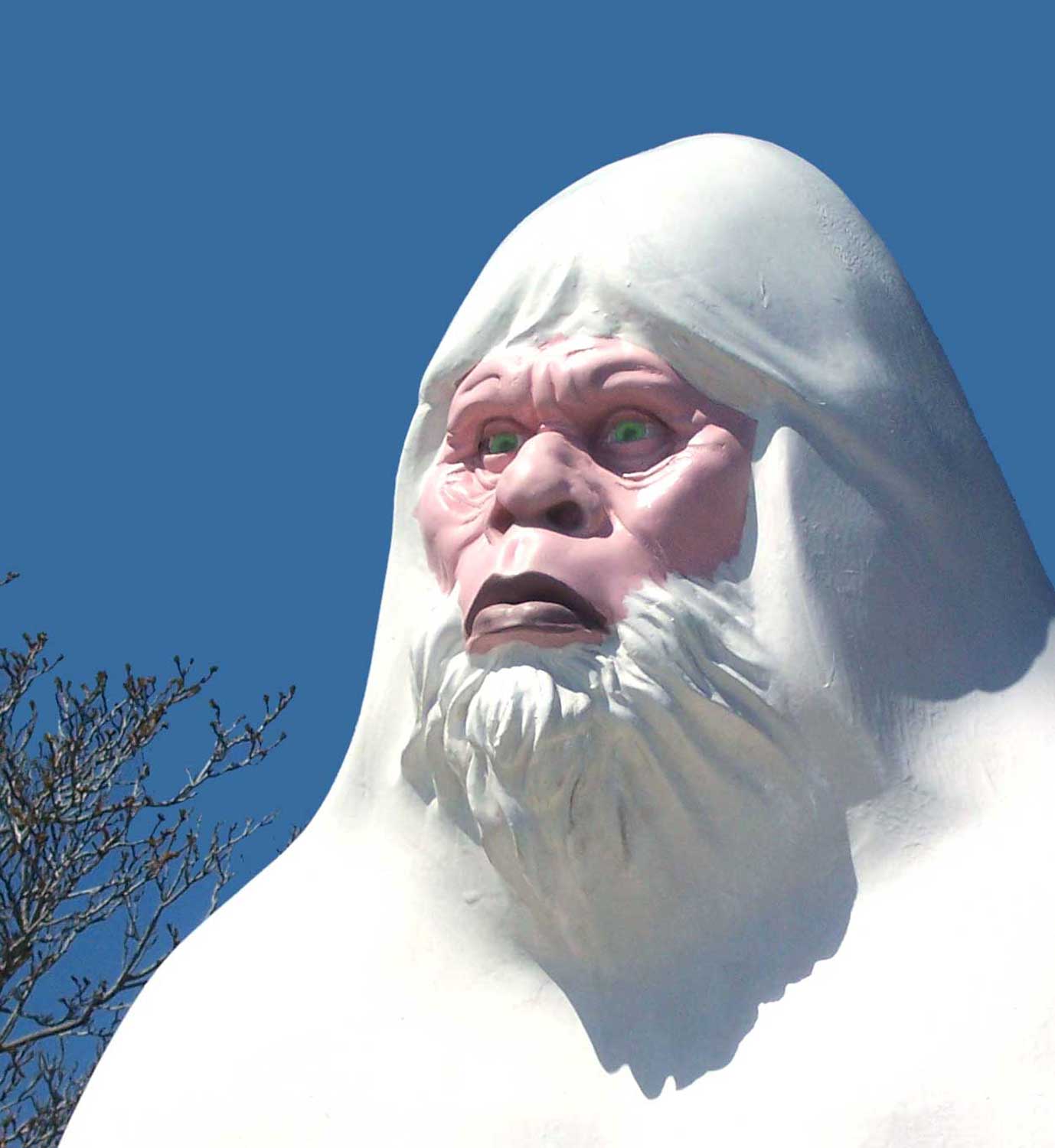
1959 Memo Outlines Regulations For Yeti Hunting In Nepal
A 1959 U.S. Foreign Service Dispatch, made available through the national archives, outlines the regulations to be undertaken should anyone make an expedition to Nepal to go in search of the Yeti – the mythical ape like creature that legend says makes its home in the Himalaya. The document is dated June 22 and is signed by Ernest Fisk, who served as Counselor of the Embassy. This memo is also an addendum to the regulations governing mountaineering and scientific expeditions to the region.
Surprisingly enough, there are just three regulations to be observed in regards to those going in search of the Yeti. The first stipulation is that you have to purchase a permit from the government of Nepal for 5000 Indian Rupees before setting out on your expedition. That's roughly $108 by today's exchange rate, a relative bargain in terms of big game hunting.
Secondly, if you do manage to come across a Yeti, it can only be photographed or captured alive. It is forbidden to kill the legendary creature unless it is in self defense. Live specimens or photos of the beast are to be turned over to the Government of Nepal as soon as possible.
Finally, it is forbidden to share any news or reports substantiating the existence of the Yeti with the press without first receiving permission from the Government of Nepal. Any such reports should first be turned over to the government before submitting them to the press or a reporter.
Reading through this memo I got a chuckle out of the fact that it is a real document handed out by the U.S. government to anyone heading into the Himalaya looking for the Abominable Snowman. It makes you wonder what other memos are out there floating around, such as Regulations for First Contact with Alien Lifeforms or How to Approach a Sasquatch. Either way, I found it to be a fun and interesting slice of history.
Wednesday, July 20, 2011
National Geographic Celebrates 100 Years Of Machu Picchu
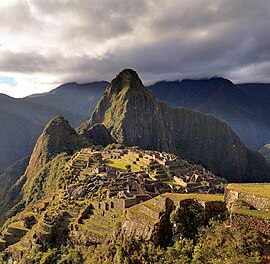
Machu Picchu is one of the most popular tourist destinations in all of South America, and the stunning images of the mountain top fortress, located high in the Peruvian Andes, have inspired more than a few thoughts of adventure. 2011 marks the 100 year anniversary of Hiram Bingham's rediscovery of the hidden fortress, and to celebrate National Geographic has launched a website dedicated to that amazing place, which has been an archaeological treasure trove for a century.
Whether you've visited the site yourself or have dreams of making the journey one day, you'll find plenty to love on the Nat Geo Machu Picchu site. Not only will you find a host of great images from ancient city, you'll also get a list of the top 10 Machu Picchu secrets and 10 famous visitors, which include several surprising names. You'll also find articles on the history of the place, five great side trips while you're in Peru, and suggestions for alternate routes to the Inca Trail – a popular 4-day trek that ends in Machu Picchu itself. And once you've finished digesting all of that information, you'll be able to test your knowledge in a Machu Picchu quiz as well.
As a kid, reading the story of Bingham's discovery of Machu Picchu was like reading a real life account of Indian Jones. I was fascinated by the fact that a structure such as this one could be hidden away for centuries, and it allowed my imagination to run wild thinking about all the other undiscovered sites that are still out there, just waiting for us to stumble across them. This Sunday, July 24th, is 100 years to the day since that archaeological find. Take a moment on that day to at least give a tip-of-the-hat to not only the Incans that built the amazing structure, but the man who rediscovered it as well.
Wednesday, July 6, 2011
$22 Billion Treasure Found In Indian Temple
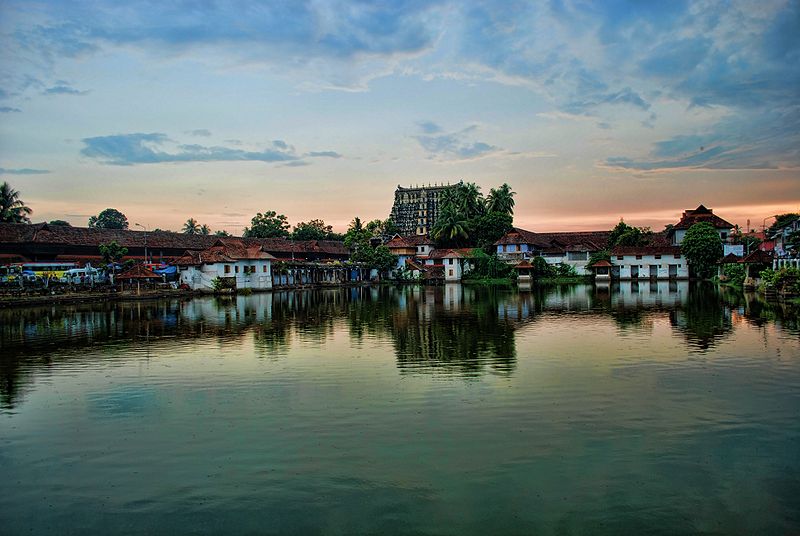
I caught this story from the Associated Press earlier and thought it was fascinating. The AP is reporting that a treasure trove, worth in excess of $22 billion, was discovered in temple in India, and that discovery has sparked a public debate on what to do with the riches.
The whole story begins with a lawyer in India expressing concerns about the lax security at the popular Sree Padmanabhaswamy Temple, located in the southern region of the country. It was believed that there were valuables stored in a series of six vaults under the Hindu shrine, but since they hadn't been opened in over 150 years, no one was exactly sure what was inside. The Supreme Court ordered that the vaults be opened, and it's contents inventoried but they had no idea what they would find. When the seals were broken, there were chests of gold coins, jewel encrusted statues, ancient works of art, and more. With five the vaults now opened and inventoried, the value of the treasures is conservatively estimated to be worth $22 billion.
Built in the 16th century, the temple has been receiving pilgrims for centuries. Those worshippers would arrive bearing gifts for the temple, and for decades those items were simply placed in storage and eventually were forgotten. The temple is has been maintained by the Travancore Royal Family for most of its history, and they are now trying to prevent the treasures from being taken from the holy site, but many feel these artifacts deserve to be in a museum and on display for everyone to see.
The debate over what to do with the treasure trove is expected to go on for some time. The artifacts do belong to the temple, which has made it one of the richest religious sites in the world entire world, but the items in the find are also reportedly of cultural significance, which makes them prime for sharing in museums as well. Whether or not that happens, and how the temple is compensated, remains to be seen.
I think it is amazing that all of these treasure were sitting in a vault under the building for centuries, completely unknown to those living and worshipping there. I would have loved to have seen the faces of the team that opened the first vault, and viewed those treasures for the first time. It has to be an amazing scene.
Thursday, December 16, 2010
Saluting Roald Amundsen
Yesterday marked the 100th anniversary of Roald Amundsen, and his team, becoming the first men to reach the South Pole. Back in 1911, the Norwegian explorer was locked in a heated battle with other explorers, who were also looking to declare themselves the winner in this race, which at the time was viewed as a matter of national pride. Amundsen won that race because he elected to use sled dogs to reach the Pole, edging out rival Robert Falcon Scott by just a few weeks.
The journey to 90ºS was a tough one. The team faced -70ºF temperatures, ranging blizzards, and low supplies. Yet they persevered, and like true explorers of the time, planted their flag in the name of Norway. A dejected Scott would later find that flag upon his arrival to the Pole, which surely was the start of his downward spiral that ultimately led to his demise.
But Amundsen survived his trek to the South Pole and went on to become the first man to reach both the North and South Pole as well. He also was the first to complete a crossing of the Northwest Passage, adding another milestone to his cold weather adventures, and cementing his status as the greatest polar explorer of all time.
In 1928, Amundsen disappeared somewhere over the Arctic Ocean, when he was helping to conduct a rescue mission of other missing polar explorers. I have no evidence to back up my theory, but my guess is that that was exactly the way he would have liked to have gone.
So, on this date, I want to salute Roald Amundsen. One of the greatest explorers of all time.
Subscribe to:
Posts (Atom)