I think it is safe to say that over the past few years, one of the biggest innovations in outdoor adventure has been the introduction of the helmet cam. Sure, we've had the ability to record our adventures in the past, but it was usually with bulky, heavy equipment that wasn't a lot of fun to use. But now days, rugged, inexpensive, lightweight video cameras have become the norm, and as a result, we now get amazing video, captured by professional and amateur filmmakers alike, with astounding regularity.
As I write this, the Consumer Electronics Show is in full swing in Las Vegas, where hundreds of companies are unveiling a slew of new gadgets to eager customers. Amongst those new technological wonders are some upgrades to the helmet cams that we've all come to know and love. These upgrades are once again set to change the outdoor world, as the theme this year seems to focus on streaming live video from the field onto the Internet, where fans can watch and follow along.
A few months back GoPro released their new HD Hero2, which brought much higher quality video to their product. But at CES, they shared the details on their new Wi-Fi BacPac which will not only allow you to control the camera from a distance, using an included remote or a smartphone app, but will give the Hero2 the ability to stream live video over the Internet. The remote even allows the user to control up to 50 cameras at a time, which could be very interesting for event organizers looking to build an online audience. The BacPac will be available in February, although price hasn't been announced yet.
Not to be left out in the cold, one of GoPro's main competitors, Contour, has also announced a streaming video option for their excellent Contour+ helmet cams as well. Contour has joined forces with Japanese company Cerevo to introduce the "Liveshell," which connects to the camera and sends the footage directly to the Internet via Ustream. The Liveshell will be available from the Contour website starting on January 21st, at a price tag of $299. The company says that this addition makes the Contour+ the most inexpensive live streaming option in the world.
Finally, GoBandit, another company that makes compact HD helmet cams, has introduced their new GoBandit Live camera. This lightweight acton cam not only features GPS tracking and recording of speed, location, and a host of other items, it also features built in WiFi. At the moment, that WiFi is designed to quickly and easily upload clips to the Internet once you're back in wireless range, but something tells me they're already working on plans to allow the camera to stream in the future as well.
Of course, in order to be able to take advantage of these live streaming options, you'll still need to have Internet access where ever you are. That's getting easier and easier to do as well, although it can still be a technical hurdle for many to over come. If you can make it work however, these companies are opening up a whole new way to interact with the world from remote places and share adventures as they happen.
Showing posts with label Technology. Show all posts
Thursday, January 12, 2012
Monday, January 9, 2012
Sahara Challenge 2012: Solo Across The Sahara
While we're on the topic of very long runs today, an epic new run just got underway last week. Finnish ultrarunner Jukka Vilijanen is attempting to run solo across the Sahara Desert, covering 2000km (1242 miles) in just 35 days. Jukka calls this run the Sahara Challenge 2012.
The run officially began last Friday, with Vilijanen knocking off 50km (31 miles) in his first day. Since then, he's been maintaining a steady pace in widely varying conditions, and allowing us to track his progress as he goes. Jukka is using the Sports Tracker mobile app to broadcast his position, which is a very cool approach. Not only does it keep us connected to his run, it is something we could use ourselves in our own workouts.
If you recognize Jukka's name, it could be because we followed his Trans-Kalahari run back in 2010, when he a couple of friends ran across the Kalahari Desert in Botswana. This time he's going it alone however, which will make for a completely different, and more challenging, experience. Throughout the next month, while on the trail, he is expected to consume between 5000 and 7000 calories per day, and will be running 40 marathons in that time frame. It's always nice to have someone to chat with and share the hardships with, but for a solo runner, these long expeditions can be very lonely indeed.
Good luck to Jukka. We'll be following along!
The run officially began last Friday, with Vilijanen knocking off 50km (31 miles) in his first day. Since then, he's been maintaining a steady pace in widely varying conditions, and allowing us to track his progress as he goes. Jukka is using the Sports Tracker mobile app to broadcast his position, which is a very cool approach. Not only does it keep us connected to his run, it is something we could use ourselves in our own workouts.
If you recognize Jukka's name, it could be because we followed his Trans-Kalahari run back in 2010, when he a couple of friends ran across the Kalahari Desert in Botswana. This time he's going it alone however, which will make for a completely different, and more challenging, experience. Throughout the next month, while on the trail, he is expected to consume between 5000 and 7000 calories per day, and will be running 40 marathons in that time frame. It's always nice to have someone to chat with and share the hardships with, but for a solo runner, these long expeditions can be very lonely indeed.
Good luck to Jukka. We'll be following along!
Video: Adventure Athletes Answer "Why?"
This week the annual Consumer Electronics Show will take place in Las Vegas, where thousands of new gadgets will be revealed to the public, who will be eager to get their hands on the new technology. At the show, Nikon will introduce their new D4 camera, which, with a reported price tag of $6000, is anything but "consumer" focused. To celebrate the launch of their new toy, and to show what it is capable, of filmmaker Corey Rich used the new camera to create the video below. It features a number of our favorite adventure athletes (Alex Honnold, Rebecca Rusch, Dane Jackson) doing what they do best and explaining why it is they do those things.
It is a beautifully shot 7 minute film, that captures the spirit of adventure in these athletes very well. It'll also have the photographers and videographers amongst us drooling over the D4, which looks like it is capable of some great things.
WHY - Nikon D4 Release Video from Corey Rich on Vimeo.
It is a beautifully shot 7 minute film, that captures the spirit of adventure in these athletes very well. It'll also have the photographers and videographers amongst us drooling over the D4, which looks like it is capable of some great things.
Wednesday, January 4, 2012
Gear Box: Tech4o Accelerator Pro Plus Watch
Every new year brings a host of new resolutions. For many, that includes getting into better shape and generally living a more healthier life. If you've made that one of your goals for 2012, then you're going to want to take a look at the new Accelerator Pro Plus watch from Tech4o, as it just might be the best training partner you've ever had.
As you would expect from any good training watch, the Accelerator Pro Plus offers countdown timers, a 50 lap chronograph, alarms, and more. It is waterproof down to 100 meters and it even tells time – in two timezones no less! But Tech4o managed to pack in some other great features that you don't find on a lot of other time pieces of this type, especially in this price range.
Using its built in accelerometer, the watch can accurately measure your pace and distance, which is fantastic for tracking performance over time. It also keeps track of total exercise and moving times, calories burned, personal best speeds and distances covered, and much more. And when paired with the included heart rate monitor, which fastens comfortably around your chest, it can measure your pulse throughout your workout and provides critical data regarding performance and recovery. The Accelerator Pro Plus even allows you to customize your personal profile to provide visual and audible alerts throughout your run, which can help you stay on pace and alert you when your heart rate moves into the red zone.
All of that data can be extremely helpful for runners looking to increase their speed and distances over time or simply increase their overall fitness. But the Accelerator Pro Plus as another trick up its sleeve in the form of PC-Link, which allows the watch and heart rate monitor to wirelessly upload the data to your computer. The PC-Link software, which is rather basic, yet still quite functional, stores your running logs and allows you to chart your progress over time. It also displays heart rate charts, tracking your minimum and maximum pulse and giving you an average heart rate for your individual runs. It is an excellent addition to the package, which can be a very useful tool for beginner and experienced runners alike. Sadly though, the software is only available for Windows PC's (Win 98/XP/ME/Vista/Win7), keeping Mac users from fully tapping the watch's abilities.
I was impressed with how easy this watch is to use. Similar time pieces can be a bit cryptic in their interfaces, but after just a couple of runs, I found that I was using the Accelerator Pro without thinking twice. That's a major plus for runners who just want to hit the trail and not have to fiddle with their technology while focused on their run. I also found this watch very comfortable to wear, even when not working out. The face isn't overly large and it isn't heavy either. Considering I pretty much wear a watch of sometime at all times, I appreciate both of those features.
Now for the best part of all. Tech4o managed to bring this fully-functional training watch to the market at a price that is difficult to argue with. The MSRP on the Accelerator Pro Plus is just $129.99, including the heart rate monitor and wireless PC-Pod for connecting to your laptop. That's a great deal, and I've paid similar prices in the past for watches with the half the functionality.
If you're looking for a great new training tool, then look no further. The Accelerator Pro Plus will give you everything you need in one great, affordable package. Now's the perfect time to grab one as well and start using it to realize all those New Year's Resolutions you've made.
As you would expect from any good training watch, the Accelerator Pro Plus offers countdown timers, a 50 lap chronograph, alarms, and more. It is waterproof down to 100 meters and it even tells time – in two timezones no less! But Tech4o managed to pack in some other great features that you don't find on a lot of other time pieces of this type, especially in this price range.
Using its built in accelerometer, the watch can accurately measure your pace and distance, which is fantastic for tracking performance over time. It also keeps track of total exercise and moving times, calories burned, personal best speeds and distances covered, and much more. And when paired with the included heart rate monitor, which fastens comfortably around your chest, it can measure your pulse throughout your workout and provides critical data regarding performance and recovery. The Accelerator Pro Plus even allows you to customize your personal profile to provide visual and audible alerts throughout your run, which can help you stay on pace and alert you when your heart rate moves into the red zone.
All of that data can be extremely helpful for runners looking to increase their speed and distances over time or simply increase their overall fitness. But the Accelerator Pro Plus as another trick up its sleeve in the form of PC-Link, which allows the watch and heart rate monitor to wirelessly upload the data to your computer. The PC-Link software, which is rather basic, yet still quite functional, stores your running logs and allows you to chart your progress over time. It also displays heart rate charts, tracking your minimum and maximum pulse and giving you an average heart rate for your individual runs. It is an excellent addition to the package, which can be a very useful tool for beginner and experienced runners alike. Sadly though, the software is only available for Windows PC's (Win 98/XP/ME/Vista/Win7), keeping Mac users from fully tapping the watch's abilities.
I was impressed with how easy this watch is to use. Similar time pieces can be a bit cryptic in their interfaces, but after just a couple of runs, I found that I was using the Accelerator Pro without thinking twice. That's a major plus for runners who just want to hit the trail and not have to fiddle with their technology while focused on their run. I also found this watch very comfortable to wear, even when not working out. The face isn't overly large and it isn't heavy either. Considering I pretty much wear a watch of sometime at all times, I appreciate both of those features.
Now for the best part of all. Tech4o managed to bring this fully-functional training watch to the market at a price that is difficult to argue with. The MSRP on the Accelerator Pro Plus is just $129.99, including the heart rate monitor and wireless PC-Pod for connecting to your laptop. That's a great deal, and I've paid similar prices in the past for watches with the half the functionality.
If you're looking for a great new training tool, then look no further. The Accelerator Pro Plus will give you everything you need in one great, affordable package. Now's the perfect time to grab one as well and start using it to realize all those New Year's Resolutions you've made.
Wednesday, December 14, 2011
Five Great Laptops For Travelers
My recent trip to the Caribbean was filled with lots of fun activities, including hiking, snorkeling, scuba diving, and sailing. It wasn't all just about fun in the sun however, as the trip was hosted by Microsoft, who assembled a group of travel writers to give us the scoop on some fantastic tools and laptops that could be of benefit for travelers of all types.
Some of those tools included cloud storage service Skydrive, which is a great way to share video and photos from your trip, and Movie Maker and Windows Live Photo Gallery which help to edit them into masterpieces that your friends and family will actually want to look at.
But the real treat was getting to play with some hot new laptops that have a lot to offer travelers who want to stay connected while on the go. For the past few years, Apple's MacBook Air has been the undisputed king of travel computes, but now Windows users have some really good options as well. Here are five of them to consider when it comes time to upgrade your technology.
Lenovo ThinkPad X1
This is a laptop designed for adventure travelers. The ThinkPad X1 is a ruggedized PC that can withstand plenty of punishment and even features a water resistant keyboard. You can, quite literally, pour a bucket of water over the machine, and it will continue to run just fine. Sure, ruggedized PC's have been around for while, the Panasonic ToughBook is a well known example, but the X1 weighs in at just 3.7 pounds and is less than an inch thick. It features USB 3.0, which is perfect charging gadgets on the go, a 160GB solid state drive, and a battery that lasts nearly 6 hours on a single charge. Lenovo has built a rugged computer that can go just about anywhere and survive the rigors of the road.
Take this one with you to Everest Base Camp. (MSRP: $1773)
Asus Zenbook UX21
For travelers who like to travel light, the new Zenbook from Asus is the perfect option. This laptop features an 11 inch screen and weighs only 2.4 pounds. It's also super-thin, just 3mm in the front and 9mm at its thickest point in the back. Battery life is a respectable 5 hours and the Intel Core i7 processor provides plenty of power for all your mobile needs. Slip this one into your carryon bag, and you'll barely know its there. The Zenbooks stylish good looks will likely turn heads as well.
Take this one with you on a month long trip through Europe (MSRP: $999)
Sony Vaio Z
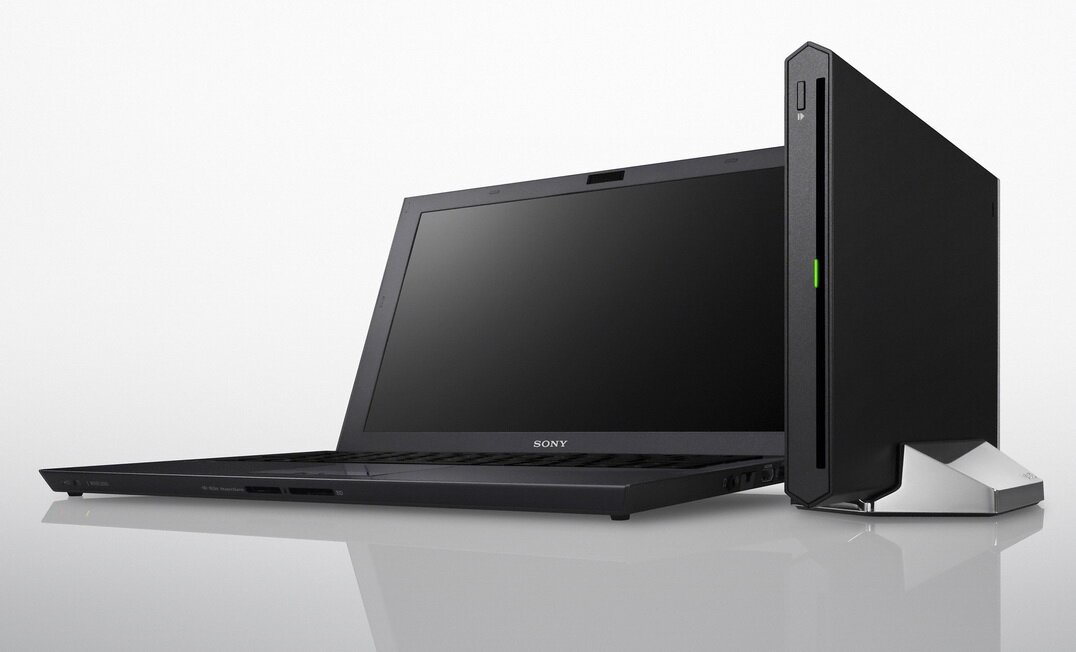
The SonyVaio Z is the workhorse of this group, providing mobile workstation power in a thin and light body. The Vaio Z is just 2.5 pounds and .7 inches thick, which is remarkable for a machine that has the ability to drive three external monitors at once. This machine is truly designed for the business traveler, as it features a 7 hour battery life out of the box and gives you have the option to add a sheet battery that extends that life to an amazing 16 hours, without adding much in the way of bulk. That means, you can hop a flight from Los Angeles to Sydney, use your laptop the entire way, and never have to worry about a recharge. Designed for to handle everything from e-mail and games to heavy duty video editing, this is a great option for when you absolutely need to get work done while you travel.
Take this one with you on a flight across the Pacific. The rest of the cabin will be jealous when their machines run out of juice before the halfway point. (MSRP: $1999)
Toshiba Portege R830
Another light and thin, yet durable option, Toshiba has built the Portege R830 to be both powerful and affordable. With a magnesium case and a specially designed shock-resistant system, this laptop is built to withstand the abuse that comes along with travel. Slightly heavier and thicker than other machines on this list, the Portege is unique in that it still includes a DVD drive, something that is becoming increasingly rare in our cloud-based, streaming media world. Battery life is a strength as well, keeping you up and running for eight hours, while powering the LED-backlit screen and surround sound.
Take this one with you when you have kids to entertain. The DVD drive will come in handy and the machine can handle the abuse from kids too! (MSRP: $799)
Samsung Series 9 - Special Edition
Built from Duralumin, the same material as some modern aircraft, the Samsung Series 9 is both rugged and beautiful. The metal casing protects the laptop nicely, while keeping it thin and light at the same time. The Series 9 is just .6 inches thin and tips the scale at a shade under 3 pounds. It still packs plenty of technology however, including a 13.3 inch backlit LED LCD screen, USB 3.0 and HDMI ports, a 7 hour battery life, and an illuminated keyboard. Throw in premium sound and a 128GB SSID drive, and you have a laptop that would make James Bond jealous.
Take this one with you everywhere! (MSRP: $1649)
Some of those tools included cloud storage service Skydrive, which is a great way to share video and photos from your trip, and Movie Maker and Windows Live Photo Gallery which help to edit them into masterpieces that your friends and family will actually want to look at.
But the real treat was getting to play with some hot new laptops that have a lot to offer travelers who want to stay connected while on the go. For the past few years, Apple's MacBook Air has been the undisputed king of travel computes, but now Windows users have some really good options as well. Here are five of them to consider when it comes time to upgrade your technology.
Lenovo ThinkPad X1
This is a laptop designed for adventure travelers. The ThinkPad X1 is a ruggedized PC that can withstand plenty of punishment and even features a water resistant keyboard. You can, quite literally, pour a bucket of water over the machine, and it will continue to run just fine. Sure, ruggedized PC's have been around for while, the Panasonic ToughBook is a well known example, but the X1 weighs in at just 3.7 pounds and is less than an inch thick. It features USB 3.0, which is perfect charging gadgets on the go, a 160GB solid state drive, and a battery that lasts nearly 6 hours on a single charge. Lenovo has built a rugged computer that can go just about anywhere and survive the rigors of the road.
Take this one with you to Everest Base Camp. (MSRP: $1773)
Asus Zenbook UX21
For travelers who like to travel light, the new Zenbook from Asus is the perfect option. This laptop features an 11 inch screen and weighs only 2.4 pounds. It's also super-thin, just 3mm in the front and 9mm at its thickest point in the back. Battery life is a respectable 5 hours and the Intel Core i7 processor provides plenty of power for all your mobile needs. Slip this one into your carryon bag, and you'll barely know its there. The Zenbooks stylish good looks will likely turn heads as well.
Take this one with you on a month long trip through Europe (MSRP: $999)
Sony Vaio Z
The SonyVaio Z is the workhorse of this group, providing mobile workstation power in a thin and light body. The Vaio Z is just 2.5 pounds and .7 inches thick, which is remarkable for a machine that has the ability to drive three external monitors at once. This machine is truly designed for the business traveler, as it features a 7 hour battery life out of the box and gives you have the option to add a sheet battery that extends that life to an amazing 16 hours, without adding much in the way of bulk. That means, you can hop a flight from Los Angeles to Sydney, use your laptop the entire way, and never have to worry about a recharge. Designed for to handle everything from e-mail and games to heavy duty video editing, this is a great option for when you absolutely need to get work done while you travel.
Take this one with you on a flight across the Pacific. The rest of the cabin will be jealous when their machines run out of juice before the halfway point. (MSRP: $1999)
Toshiba Portege R830
Another light and thin, yet durable option, Toshiba has built the Portege R830 to be both powerful and affordable. With a magnesium case and a specially designed shock-resistant system, this laptop is built to withstand the abuse that comes along with travel. Slightly heavier and thicker than other machines on this list, the Portege is unique in that it still includes a DVD drive, something that is becoming increasingly rare in our cloud-based, streaming media world. Battery life is a strength as well, keeping you up and running for eight hours, while powering the LED-backlit screen and surround sound.
Take this one with you when you have kids to entertain. The DVD drive will come in handy and the machine can handle the abuse from kids too! (MSRP: $799)
Samsung Series 9 - Special Edition
Built from Duralumin, the same material as some modern aircraft, the Samsung Series 9 is both rugged and beautiful. The metal casing protects the laptop nicely, while keeping it thin and light at the same time. The Series 9 is just .6 inches thin and tips the scale at a shade under 3 pounds. It still packs plenty of technology however, including a 13.3 inch backlit LED LCD screen, USB 3.0 and HDMI ports, a 7 hour battery life, and an illuminated keyboard. Throw in premium sound and a 128GB SSID drive, and you have a laptop that would make James Bond jealous.
Take this one with you everywhere! (MSRP: $1649)
Wednesday, November 9, 2011
New Ski Goggles Keep You Connected On The Slopes
In addition to being a fan of adventure, exploration, and travel, I also happen to be a technology and gadget guy. I love playing around with new tech toys and finding interesting ways that they can improve my life. When I find a cool gadget that would also be fun to use on my travels or outdoor sports, than I really get excited. Such is the case with a new heads-up display system from Recon Instruments that fits inside specific ski goggles. Recon has just released their MOD and MOD Live devices, both of which look like they would be a lot of fun to use on the slopes.
The basic MOD system incorporates a micro-optics display (MOD) inside your goggles and displays such data as your current rate of speed, vertical distances traveled, the temperature and so on. The system also incorporates a GPS chip so that it can track your location and the routes you take on the mountain. It even includes a sophisticated chrono/tracker for showing you real-time info on your current run.
All of that is pretty cool stuff, but it is also technology we've seen in goggles before. Step up to the MOD Live system however, and you really get some cool additions. MOD Live is powered by Google's Android operating system and links up to your smartphone via Bluetooth technology. With a data connection enabled, the MOD Live can add navigation cues to your screen and includes a database of a ton of resorts across the world to show you the best runs and points of interest. It'll also allow you track the location of your friends who are also using the Live system, and will display text messages and caller ID on the screen.
I had a chance to play with a pre-release version of the device at Outdoor Retailer this past August and thought that it was very cool. While I wasn't actually on the slopes of course, I did get to see what the tiny screen is capable of, and came away quite impressed. The outdoor-enthusiast-slash-tech-guy in my was drooling a bit over the possibilities, and its good to see that MOD and MOD Live are now available. Price? $299 and $399 respectively.
Check out the video below to see more of what these devices are capable of.
Recon Instruments Fall 2011 Product Lineup from Recon Instruments on Vimeo.
The basic MOD system incorporates a micro-optics display (MOD) inside your goggles and displays such data as your current rate of speed, vertical distances traveled, the temperature and so on. The system also incorporates a GPS chip so that it can track your location and the routes you take on the mountain. It even includes a sophisticated chrono/tracker for showing you real-time info on your current run.
All of that is pretty cool stuff, but it is also technology we've seen in goggles before. Step up to the MOD Live system however, and you really get some cool additions. MOD Live is powered by Google's Android operating system and links up to your smartphone via Bluetooth technology. With a data connection enabled, the MOD Live can add navigation cues to your screen and includes a database of a ton of resorts across the world to show you the best runs and points of interest. It'll also allow you track the location of your friends who are also using the Live system, and will display text messages and caller ID on the screen.
I had a chance to play with a pre-release version of the device at Outdoor Retailer this past August and thought that it was very cool. While I wasn't actually on the slopes of course, I did get to see what the tiny screen is capable of, and came away quite impressed. The outdoor-enthusiast-slash-tech-guy in my was drooling a bit over the possibilities, and its good to see that MOD and MOD Live are now available. Price? $299 and $399 respectively.
Check out the video below to see more of what these devices are capable of.
Friday, November 4, 2011
A 360º Panoramic Video Mountain Bike Ride Through Moab
Moab, Utah is considered one of the best places to go mountain biking in the U.S. – if not the world. There are an abundance of trails for a variety of skill levels and the views are simply spectacular. One of the more popular of those trails is Slickrock, a 13-mile long loop that offers a significant physical and technical challenge. In short, it isn't a trail for beginners.
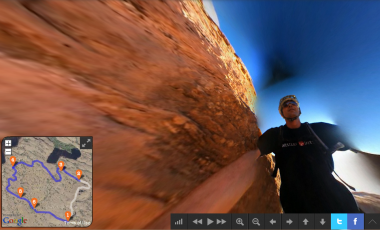
For those of us who haven't had the opportunity to ride Slickrock, there is a great new panoramic interactive video that allows us to check it out for ourselves. The video was made by three men – Joergen Geerds, Dan Finkler and Mark Sevenoff– who used six Sony Xperia Android phones to capture the entire 360º view around them as they rode. The result is a very cool interactive video that allows you to switch views, pan and zoom, and generally experience the entire ride without fear of crashing.
You can check out this amazing interactive video by clicking here. I've also embedded another video below which gives you an idea of what the project was all about and how it was made, using rather simple technology. It's an interesting piece, but really only sets the stage for the interactive version, which will keep you entertained for some time. Be sure to switch between the various views. The "Little Planet" option is especially trippy.
For those of us who haven't had the opportunity to ride Slickrock, there is a great new panoramic interactive video that allows us to check it out for ourselves. The video was made by three men – Joergen Geerds, Dan Finkler and Mark Sevenoff– who used six Sony Xperia Android phones to capture the entire 360º view around them as they rode. The result is a very cool interactive video that allows you to switch views, pan and zoom, and generally experience the entire ride without fear of crashing.
You can check out this amazing interactive video by clicking here. I've also embedded another video below which gives you an idea of what the project was all about and how it was made, using rather simple technology. It's an interesting piece, but really only sets the stage for the interactive version, which will keep you entertained for some time. Be sure to switch between the various views. The "Little Planet" option is especially trippy.
Wednesday, September 7, 2011
Iridium Introduces AxcessPoint, WiFi Internet Access Anywhere
In this increasingly connected world we live in it has become more and more important to stay in contact no matter where we go. Over the years, cell service has improved (and even reached Everest!) and mobile Internet is now a possibility in more places. Still, there are remote sections of the globe where communications remains a challenge and the only option remains satellite service from companies like Iridium.
Now, the company is introducing a new product dubbed AxcessPoint, which will offer WiFi Internet access while in those remote place, albeit at speeds that are far from broadband. The new device, which connects to your existing Iridium satellite phone, is about the size of a deck of cards and costs $200. When activated, it turns into a mobile hotspot, offering blazing speeds of up to 28Kbps.
Yes, you read that right. This will be the equivalent of dial-up speeds from the early 90's and will come at a price. The service will cost $1 per minute, so you'd better make your time online count. Of course, while that sounds slow and expensive, when you consider that you can use it at the North and South Pole or at in the middle of the Indian Ocean, you start to see how this product could be useful.
28Kbps is agonizingly slow by todays standards, but with a little patience, you can still get quite a bit done. Those speeds should be just fine for sending back a few tweets for example or even uploading a blog post, provided you don't include a lot of images. Doing anything with video is probably completely out of the question, but e-mailing, light web browsing, and similar activities should work quite well.
The AxcessPoint is compact, lightweight, and relatively inexpensive, which should make it an attractive offering for those heading out into the field. Read more about it in this story from Gizmodo.
Now, the company is introducing a new product dubbed AxcessPoint, which will offer WiFi Internet access while in those remote place, albeit at speeds that are far from broadband. The new device, which connects to your existing Iridium satellite phone, is about the size of a deck of cards and costs $200. When activated, it turns into a mobile hotspot, offering blazing speeds of up to 28Kbps.
Yes, you read that right. This will be the equivalent of dial-up speeds from the early 90's and will come at a price. The service will cost $1 per minute, so you'd better make your time online count. Of course, while that sounds slow and expensive, when you consider that you can use it at the North and South Pole or at in the middle of the Indian Ocean, you start to see how this product could be useful.
28Kbps is agonizingly slow by todays standards, but with a little patience, you can still get quite a bit done. Those speeds should be just fine for sending back a few tweets for example or even uploading a blog post, provided you don't include a lot of images. Doing anything with video is probably completely out of the question, but e-mailing, light web browsing, and similar activities should work quite well.
The AxcessPoint is compact, lightweight, and relatively inexpensive, which should make it an attractive offering for those heading out into the field. Read more about it in this story from Gizmodo.
Thursday, August 25, 2011
Ruggedized PC's For Your Next Expedition
Lets face it. In recent years our mandatory gear list for any expedition has expanded to include a number of tech toys. We now carry smartphones, MP3 players, tablets, and laptops with us when we head out on our adventures. Not only are they great for staying in touch with friends and family back home, they also allow us to get some work done on the road and even chronicle our expeditions. Just like our gear manufacturers, PC companies continue to improve their products as well, and as a result, we now have an interesting array of products that are available for us to take into the field.
Ben Rudolph, one of the writers at the Windows Experience Blog, recently put a number of these ruggedized PC's through a battery of interesting tests, including burying one in sand and pouring a cup of water over another. The results were quite interesting and may help you decide on the next computer you'll want to have with you when you set out on an adventure. Ben filmed his tests so you can watch him punish these computers on video. Unfortunately, I can't embed the video here, but if you want to watch him do nasty things to laptops, click here.
Included in Ben's tests were the Panasonic Toughbook 31, which many of you are probably familiar with, and the Lenovo Thinkpad X220. The Toughbook actually looks like it could survive a surgical strike from a cruise missile, although it does weigh in at more than 8 pounds, which is a lot of weight for anyone wanting to travel fast and light. That said, the laptop looks like a great Base Camp computer that could survive in nearly an environment. The Thinkpad was the laptop that was doused in water, and it was impressive how it kept running, even as liquid flowed out of its case. There were other PC's included in the tests as well, including ruggedized tablets that look like they offer a lot of potential.
If you're in the market for a new computer to stay connected while in remote places, you'll want to check out Ben's blog post and video. It is amazing how far this technology has come and how tough these devices are today.
Thursday, June 16, 2011
Adventure Blog Content Featured On Flipboard
It's no secret that I love my iPad. In fact, I think it is a fantastic device for travel and I rarely go anywhere without it these days. With music, movies, books, magazines, and Internet connectivity, it is one of the most versatile pieces of technology to come along in a very long time. Add in some great apps, and it only gets betters.
One of my favorite apps is Flipboard, a program that takes content from the web and formats it into a magazine style interface that is perfect for consumption on the iPad. The app lets you import RSS feeds from Google Reader or from blogs and websites that you select manually. There are even some built-in content partners that are conveniently filed under specific categories to help make it easier to find interesting sites and blogs that may be pertinent to your interests. One of the blogs that is now featured as a part of Flipboard is The Adventure Blog, and I couldn't be happier.
If you're a Flipboard user and want to add my content to your feed, you'll find me listed under the "Travel" category. Simply tap on The Adventure Blog to start having my stuff sent directly to your Flipboard content. I must say, it looks great, it's easy to read, and it is a great way to kick back an enjoy the stories that I enjoy sharing with everyone.
Thanks to the crew over at Flipboard for adding me to the app. I'm happy to be a part of a project that I already use myself and enjoy so much.
Wednesday, June 15, 2011
Communicating From The Far Corners Of The World
We are living in an amazing age. Technology continues to evolve at an astounding rate, and our methods of communications, even from remote places, has turned the planet into one giant global neighborhood. The ability to share our adventures, even while in the field, has changed our perception of exploration, as we are now able to stay in constant contact with explorers that are pushing the boundaries of what we thought was possible. Now days, it seems strange when an expedition sets off without having some form of communications back to the world, which is what makes a blog like this one possible.
Yesterday, Explorers Web posted a story written by Seth Wolpin, a climber who recently summited Everest. In the article, Seth discusses the various communications tools that are now available to mountaineers on their expedition and gives some great information on what he used during his climb.
As we all know, Everest received a major upgrade this year with the inclusion of 3G cell service that, when working, actually reached all the way to the summit. The cell tower for the service was built in Gorak Shep, and powered by solar panels, and when early season clouds covered the region, the tower wasn't functional for much of the time. Thankfully, good old semi-reliable satellite phone service still operated when necessary.
Seth's article is both practical and functional as he lays out the tools that he used on his expedition. He discusses options for both voice and data, and applies it to use in cell phones, sat phones, laptops, and more. He shares tips on pre-paid services, texting, sending e-mail, and setting up a data connection on a computer. If you're a tech oriented person, a lot of this will likely seem like old hat, but if you're not as technologically adept, you'll probably learn quite a bit, and much of this can be applied to your next adventure in the field as well.
In the future, I suspect data connections will continue to get faster and more reliable, and we'll probably see those connections become the primary method of communications from Everest Base Camp and beyond. Who would have thought even a few year ago that a device like the SPOT Connect would allow us to use our smartphones to send texts and other data from just about anywhere on the planet. Expedition communications gear is really evolving quickly, and it is changing the nature of extreme adventures along with it.
Subscribe to:
Posts (Atom)