An ultrarunner, who also happens to be a park ranger, set a new record for running across the Great Smokey Mountain National Park a few months back, when he ran the section of the Appalachian Trail, which crosses that region. According to this story, from the Knoxville News, 26-year old David Worth covered the 72-mile distance in 14 hours, 50 minutes, and 22 seconds.
Worth actually made his record breaking run back on May 19, but this story of his epic run is just now starting to leak out. He began his journey on the North Carolina side of the national park before dawn and then proceeded to run west. He took a break at about 12:40 in the afternoon, in the parking lot of Newfound Gap, the halfway point of the run, where he ate three boiled potatoes, before he hit the trail once again. Just after 7 PM that evening, he reached the finish line at Davenport Gap, where the AT exits the Great Smokey Mountain National Park.
As the Adventure Journal, who linked me to this story, points out, Worth averaged more than a 12-minute mile while on his run. Any runner will tell you that that isn't incredibly fast. But what is impressive is that he managed to keep running, across often difficult sections of trail, for nearly 15 hours. That is quite a display of endurance to say the least. Still, at that pace, he did manage to break the old record, held by Jon Lawler, by more than an hour.
Worth says he isn't done with the AT yet and would like to give it another go to see if he can shave even more time off his record. In August, he also ran a series of interconnected trails in the park that covered about 44 miles in length, which he completed in 10 hours, 3 minutes, 41 seconds. Those trails were almost entirely up or down mountains however, which was a very different experience than the one that he had in May.
Reading this guy's story makes me want to hit the trail myself.
Showing posts with label National Parks. Show all posts
Wednesday, September 14, 2011
Friday, September 9, 2011
National Park Service Raises Price Of Denali Climbing Permits
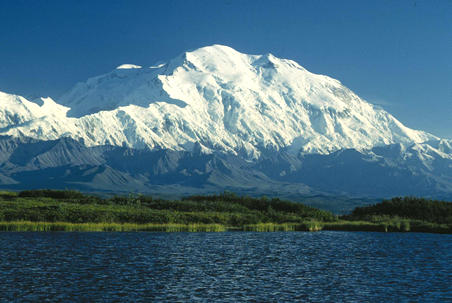
Earlier this week, the National Park Service announced that it was raising the price of climbing permits for Denali, the tallest peak in North America. The fee increase, we're told, is to help offset the rising costs of rescuing climbers on the mountain.
Beginning in the 2012 season, the cost of a standard permit to climb the 6196 meter (20,327 ft) mountain will increase from $200 to $350. Permits issued for climbers 24 years old and younger will cost $250. Fees were originally instituted on the mountain back in 1995 to help cover the costs of maintaining a Search and Rescue.
Denali is a challenging, difficult mountain to climb, and since it is one of the Seven Summits, it is also a popular one. As a result, it sees its fair share of traffic each year, and along with that traffic comes some concerns with accidents and injuries. To help protect the climbers, the Park Service maintains three camps at various altitudes, plus a high altitude helicopter used for rescues. The NPS also funds an educational program designed to help prevent situations that would require climbers to need a SAR team.
Personally, I think a $350 permit is still a bargain on this type of climb and I don't see this impacting the number of people on the mountain too an great extent. If it helps fund operations that make the mountain safer, than I think it is definitely a justifiable rate increase and one that most mountaineers would applaud as well.
Beginning in the 2012 season, the cost of a standard permit to climb the 6196 meter (20,327 ft) mountain will increase from $200 to $350. Permits issued for climbers 24 years old and younger will cost $250. Fees were originally instituted on the mountain back in 1995 to help cover the costs of maintaining a Search and Rescue.
Denali is a challenging, difficult mountain to climb, and since it is one of the Seven Summits, it is also a popular one. As a result, it sees its fair share of traffic each year, and along with that traffic comes some concerns with accidents and injuries. To help protect the climbers, the Park Service maintains three camps at various altitudes, plus a high altitude helicopter used for rescues. The NPS also funds an educational program designed to help prevent situations that would require climbers to need a SAR team.
Personally, I think a $350 permit is still a bargain on this type of climb and I don't see this impacting the number of people on the mountain too an great extent. If it helps fund operations that make the mountain safer, than I think it is definitely a justifiable rate increase and one that most mountaineers would applaud as well.
Tuesday, August 2, 2011
Hiker Falls To Her Death In Yosemite
A hiker in Yosemite National Park fell 600-feet to her death on Sunday while descending from Half-Dome in the rain. The death was just the latest in a particularly bad year in the National Park, which has already seen 13 other deaths in 2011.
26-year old Haley LaFlamme, along with three of her friends, were making their way down from the summit while a thunderstorm raged around them. The group was on the famous Half Dome cables, which are put in place on the steeper sections of the trail to aid with the climb, when LaFlamme slipped and fell. Rangers were immediately called for assistance, but she died almost instantly.
With 14 deaths in Yosemite already this year, 2011 is on pace to be one of the worst years in the history of the Park. In the five previous years, stretching from 2006-2010, Yosemite had 38 deaths total, and with 4 million visitors per year, the park is amongst the most visited in the entire U.S. system.
Safety experts are blaming some of the fatalities this year on the unusually heavy snowfalls this past winter. Those snows lingered later into the year, and have created heavy run-offs that continue even now. Rivers and streams remain swollen, and those conditions have caught many unaware, such as the three people who were swept over Vernal Falls a couple of weeks back. Hopefully this is not a trend that will continue, and visitors to Yosemite will take a bit more caution in the days ahead.
My condolences to Haley's friends and family.
Wednesday, June 29, 2011
U.S. National Parks Face Major Threats To Their Future
This story was the topic of my daily post at Gadling.com today, but it is an important one, so I wanted to share it here as well.
Yesterday, the National Parks Conservation Association released a report that examines the biggest threats to America's national parks and assesses what can be done to address those threats. They found that climate change, invasive species, increased development, and a number of other forces are all causing major issues in the parks now, and will only continue to do so in the future, unless a comprehensive plan is created to help protect those natural places. The NPCA also cites a lack of funding for being a major issue as to why the National Park Service can't address these issues properly at the moment.
The report, which is being called the most complete examination of the future of the national parks, was conducted over a ten year time frame. During that time, researchers surveyed 80 parks in the U.S. system and came away with some sobering facts. For instance, they discovered that 95% of the parks assessed had completely lost at least one plant or animal species over the past decade. Furthermore, 63% of the parks also showed signs of degradation to the air and water quality as well.
It isn't all bad news however, as the NPCA noted in the report that with proper funding, training, and education, the Park Service can take measures to protect the parks and prevent irrevocable changes to their landscapes. They even list a couple of good examples to illustrate their point. The problem is "proper funding" does't seem to be available right now thanks to a sluggish economy and an ongoing budget crisis. Still, the organization recommends that the Obama Administration pledge federal resources to helping protect the parks for future generations to enjoy as well.
I'm a huge fan of America's national parks. They are amazing places that have, in some cases, been neglected in recent years due to lack of funding. I know, and understand, that climate change is going to alter those places dramatically no matter what we do, but that doesn't mean we can't take other measures to ensure that the parks are safe and are given the proper attention to steward them into the future in fine fashion.
The entire NPCA report can be found here. Definitely worth a read if you're a fan of the parks as I am.
Thursday, June 9, 2011
20 Great Hikes In The National Parks
With summer nearly officially upon us, it is time to hit the trail and go for a hike. And what better place to hike than inside a national park? With that in mind, National Geographic Adventure has compiled a list of the 20 best hikes in the national parks, with some fantastic options for those looking to explore those great destinations on foot.
Amongst the trails that get a nod are Teton Crest Trail in Grand Tetons National Park, Wyoming. Called the "signature hike" of the Grand Tetons, this one takes six days to complete, covering some of the most fantastic backcountry in North America. Outer Mountain Loop Trail in Big Bend gets a well deserved nod as well, although I don't recommend that trail in the summer. Wait for the cooler autumn weather before exploring that three day hike in the Texas heat. A better warm-weather option is the Yellowstone trail from Bechler to Old Faithful. That four-day trek will take you past some of the park's amazing geysers and waterfalls.
The other 17 hikes that earn a spot on the list are spread out from Maine to Alaska and are equally impressive. They range in length and difficulty, offering up something for the experienced backpacker and beginners alike, while sharing the common thread of some of the most breathtaking scenery you could ever hope to see.
So? Did they acknowledge your favorite national park trail? What would you add to this already impressive list?
Monday, April 18, 2011
A Visit To Joshua Tree
Last week I mentioned that it was the start of National Parks Week here in the U.S., which is an annual celebration of all the fantastic wilderness areas that have been set aside for public use by the government. Places like Yosemite and Yellowstone and dozens more. During this week, which runs until next Sunday, April 25th, all of the parks in the U.S. system have waived their entry fee, allowing visitors to explore them for free. Over the weekend, I was fortunate enough to be invited to Joshua Tree to attend a special event which not only kicked off National Parks Week, but also marked the beginning of Nature Valley's 2011 Preserve The Parks campaign.
The event was actually held just outside Joshua Tree National Park on a parcel of land that epitomizes the area. It is dry and hot, like many deserts around the planet, but it is also amazingly beautiful and alive with plants and animal life. This particular piece of land, located near the town of Joshua Tree, is 950 acres of desert wilderness that also happens to be home to a protected species of desert tortoises. It was purchased by the Mojave Desert Land Trust in an effort to protect the ecosystem there. The Trust is now working with the government to try to get this land incorporated into the national park itself.
On Saturday, I joined a group of volunteers, Nature Valley representatives, and members of the National Parks Conservation Association to work on a restoration project in the region. Amongst the group was actor Josh Holloway of Lost fame, who is serving as the spokesperson for the Preserve the Parks campaign this year. Holloway is a dedicated proponent of the national parks and an avid outdoorsman. While elements of the event were photo-ops to for use in promoting the program, Josh was also eager to join us in rebuilding trails and reshaping the land to help protect the environment there more efficiently. It was a great effort, and with the number of people on hand, we quickly had the area looking good.
This was my first trip to Joshua Tree, and I was quite taken by how beautiful it was. There are spectacular views in all directions and the plant and animal life were in abundance. In addition to spotting a couple of the desert tortoises, whose land we were there to protect, I also spotted a snake, a desert hare, and several hummingbirds. I'm told that the area has its fair share of sheep, mule deer, bobcats, and mountain lions as well, although none of them showed their faces while we were in the area.
The one thing that I came away with from this trip was that my stay was by far too short. I need to plan on going back to explore Joshua Tree more fully and take in the wilderness there. This is some of the most pristine, untouched desert on the planet, and definitely worth the trip if you're headed to California.
I was also very impressed with the commitment and dedication of everyone involved, starting with the folks at Nature Valley and the NPCA. The Mojave Desert Land Trust is also razor focused on achieving its goals, and even the local volunteers were taking ownership of the land that is right in their backyard. It was a fantastic crew, top to bottom, and I felt lucky to have been a part of it.
Nature Valley will be bringing similar events to other parks across the country this summer. At the moment, the plan is to hold six more projects in a various parks such as Yellowstone and Acadia, amongst others. If you're interested in taking part in one of those, be sure to check out the Preserve the Parks website for more information on when those events will be happening.
Friday, April 15, 2011
National Parks Week Begins Tomorrow!
As an avid traveler and outdoor enthusiast, I'm a big fan of America's National Parks. These amazing wilderness settings are amongst the most beautiful places I've visited on Earth, and that is saying something, as I've been fortunate enough to visit some pretty spectacular places. To celebrate these wonderful places, the Park Service has declared April 16th - 24th as National Parks Week and has scheduled a host of activities to take place during that period. They're also making the parks free to visitors during those days, waiving the entrance fee for all who want to experience the wonders of the parks for themselves.
Over the course of the next nine days, there will be a lot of promotional activities taking place in a number of parks throughout the country. Be sure to check out NPS.gov for more information on those official park events, and drop by the National Parks Promotional Council website to see what some of the affiliated organizations have on tap as well.
As for me, I'm heading out to Joshua Tree for the weekend. The National Parks Conservation Association is holding an event out that way, and I'll be on hand to cover it and take part in the festivities. I've never been to Joshua Tree before, so I'm looking forward to experiencing a new park and kicking of National Parks Week in grand style. I hope you have plans to enjoy a park during the week ahead as well.
Thursday, March 17, 2011
Small Aircraft Missing In The Grand Canyon
The National Park Service, along with local authorities near the Grand Canyon, are searching for a small aircraft that hasn't been seen, or accounted for, since last Friday. The plane is believed to have gone missing in a remote region of the park, although no traces of it have been found so far.
Last Sunday, a small aircraft flying over the park contacted the Grand Canyon Airport to inform them that he had detected an active Emergency Locator Beacon in a region about 30 miles from the Grand Canyon Village. The NPS then scrambled a helicopter to search the region, but found no traces of a downed plane, nor did they pick up the call from the beacon. Without nothing else to go on, they called off the search, and returned to the airport, unaware of any missing planes.
The following day, the family of 47-year-old Joseph Radford called local police in Glendale, Arizona to alert them that the man hadn't been seen since March 11th when he flew from Glendale to the GC Airport, where he stopped to refuel. After that, he set off again, and hasn't been seen since.
Since that time, the NPS has been sweeping a 600 square mile area of the park with helicopters and search planes looking for any trace of Radford or his missing plane. The search has mainly taken place in the Fossil Corridor and Scorpion Ridge area of the Grand Canyon, which is one of the more remote sections of the park. So far, that search hasn't turned up any evidence that the plane went down there, but due to thick foliage, it is possible that it is there, but it can't be seen.
Weather conditions have deteriorated today, which has hampered the search, but there are plans for an ongoing SAR operation, both from the air and on the ground.
Thanks to Bruce from 360 Adventures for passing this story my way. Lets hope for the best!
Subscribe to:
Posts (Atom)